
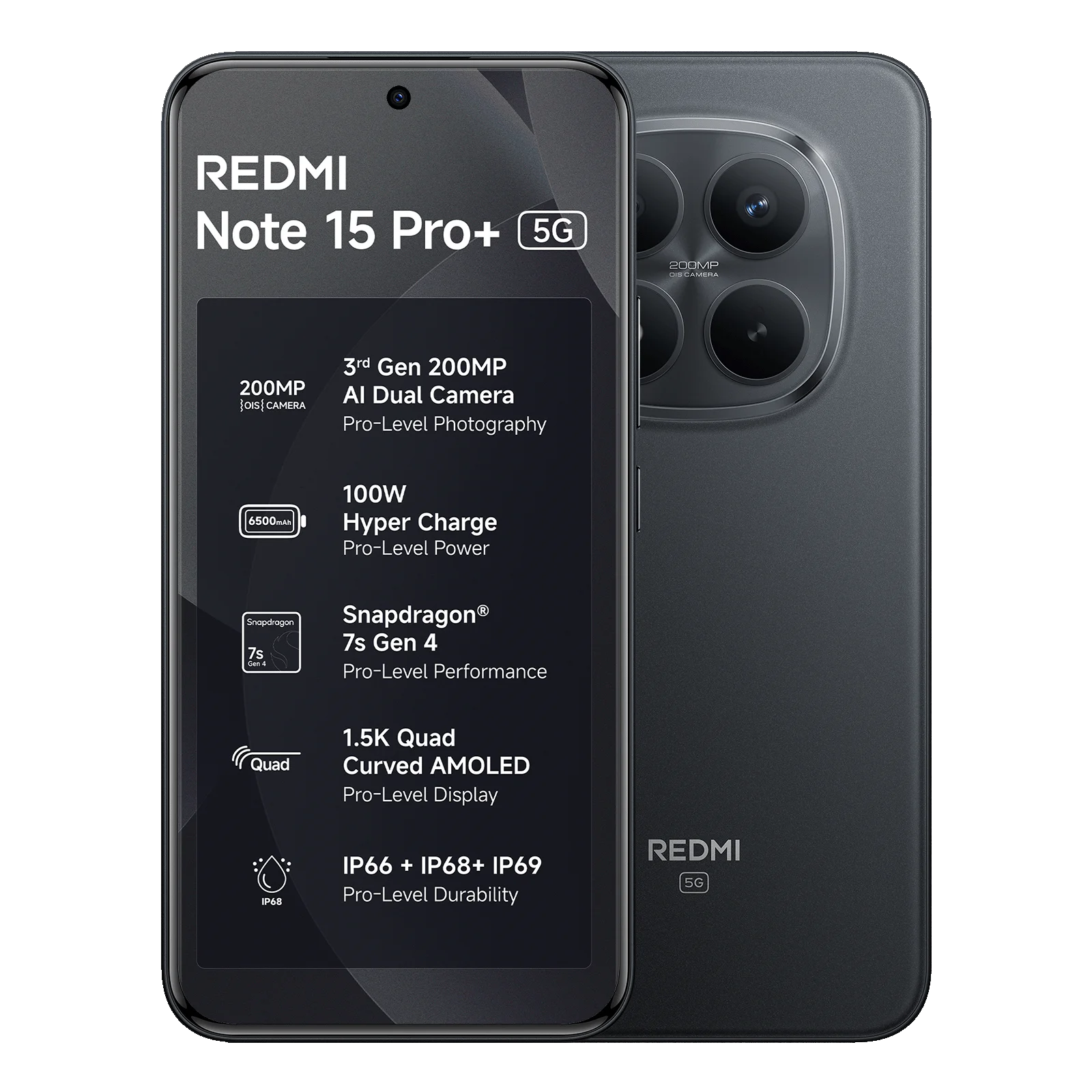
It is currently positioned as a high-end “bridge” phone—sitting right between a mid-range and a flagship device.
Key Specifications
- Display: 6.83-inch 1.5K AMOLED, 120Hz, with an impressive 3200 nits peak brightness.
- Processor: Snapdragon 7s Gen 4 (efficient for daily tasks, but not a top-tier gaming chip).
- Camera: 200MP Main (OIS) + 8MP Ultra-wide + 2MP Macro.
- Battery: Massive 6500mAh Silicon-Carbon battery.
- Charging: 100W HyperCharge (0 to 100% in about 38 minutes).
- Durability: Gorilla Glass Victus 2 and IP69K rating (highly resistant to water and dust).
The Pros (What’s Great)
- Battery King: The 6500mAh battery is the biggest highlight. Even with heavy use (5G, YouTube, and GPS), it easily lasts 1.5 to 2 days.
- Insane Brightness: The 3200 nits display is crystal clear even under direct sunlight in places like Chennai or Pondicherry.
- Rugged Build: It uses a “Titan Structure,” making it very drop-resistant. The IP69K rating means it can even survive high-pressure water jets.
- Daylight Photography: The 200MP sensor captures incredible detail and offers very clean 4x lossless zoom during the day.
The Cons (What’s Not So Great)
- Software Bloatware: Like most Redmi phones, it comes with pre-installed apps (bloatware) that you’ll have to manually disable.
- Performance Gap: While smooth for multitasking and web development work, it isn’t the fastest for heavy 4K video editing or high-end gaming compared to competitors like OnePlus.
- Low-Light Camera: Photos taken at night can sometimes look a bit grainy or over-processed.
- Size: Because of the huge battery and 6.83-inch screen, the phone feels quite bulky in the hand.
Pricing (Current Estimate)
- 8GB/256GB: ₹37,999
- 12GB/256GB: ₹39,999
- 12GB/512GB: ₹43,999
Final Verdict: If you want a phone that has a long-lasting battery and a tough build that won’t break easily, this is a solid choice. However, if you are looking for pure “speed” or a cleaner software experience, you might want to look at other options in the ₹40k range.